

If past experiences are holding you back, whether it’s trauma, PTSD, anxiety, or memories that won’t let go, EMDR therapy offers a structured, evidence-based path forward.
Rafati Counselling Services provides EMDR therapy in Thornhill for individuals across Toronto, Thornhill, Vaughan, Richmond Hill, and North York. Pantea Rafati, Registered Psychotherapist (RP, MACP), delivers this specialized therapy using a structured, evidence-based approach.
EMDR is not talk therapy. It works differently, using a structured, therapist-guided process rather than requiring you to talk through every detail of what happened.
EMDR stands for Eye Movement Desensitization and Reprocessing. It is an evidence-based psychotherapy approach originally developed to treat trauma and PTSD, and now widely used for anxiety, phobias, depression, OCD, and a range of other conditions.
Unlike traditional talk therapy, EMDR does not require you to describe your trauma in detail or relive painful experiences verbally. Instead, it works by engaging your brain’s natural ability to process and store memories, a process that becomes disrupted after distressing or traumatic events.
During an EMDR session, your therapist guides you to briefly focus on a difficult memory while simultaneously engaging in bilateral stimulation, typically guided eye movements, but sometimes tapping or auditory tones.
This dual attention process helps the brain reprocess the stored memory, reducing its emotional charge so it no longer triggers the same level of distress.
The goal of EMDR is not to erase memories. It is to change how those memories are stored so when you think about what happened, you can do so without being overwhelmed by it.
EMDR therapy is recognized by the World Health Organization (WHO) and the American Psychological Association (APA) as an effective treatment for PTSD and trauma.
Learn how EMDR can also help with depression.
EMDR may be appropriate for individuals who have experienced:
Not sure if EMDR is the right fit for you? Your therapist can help you find out.
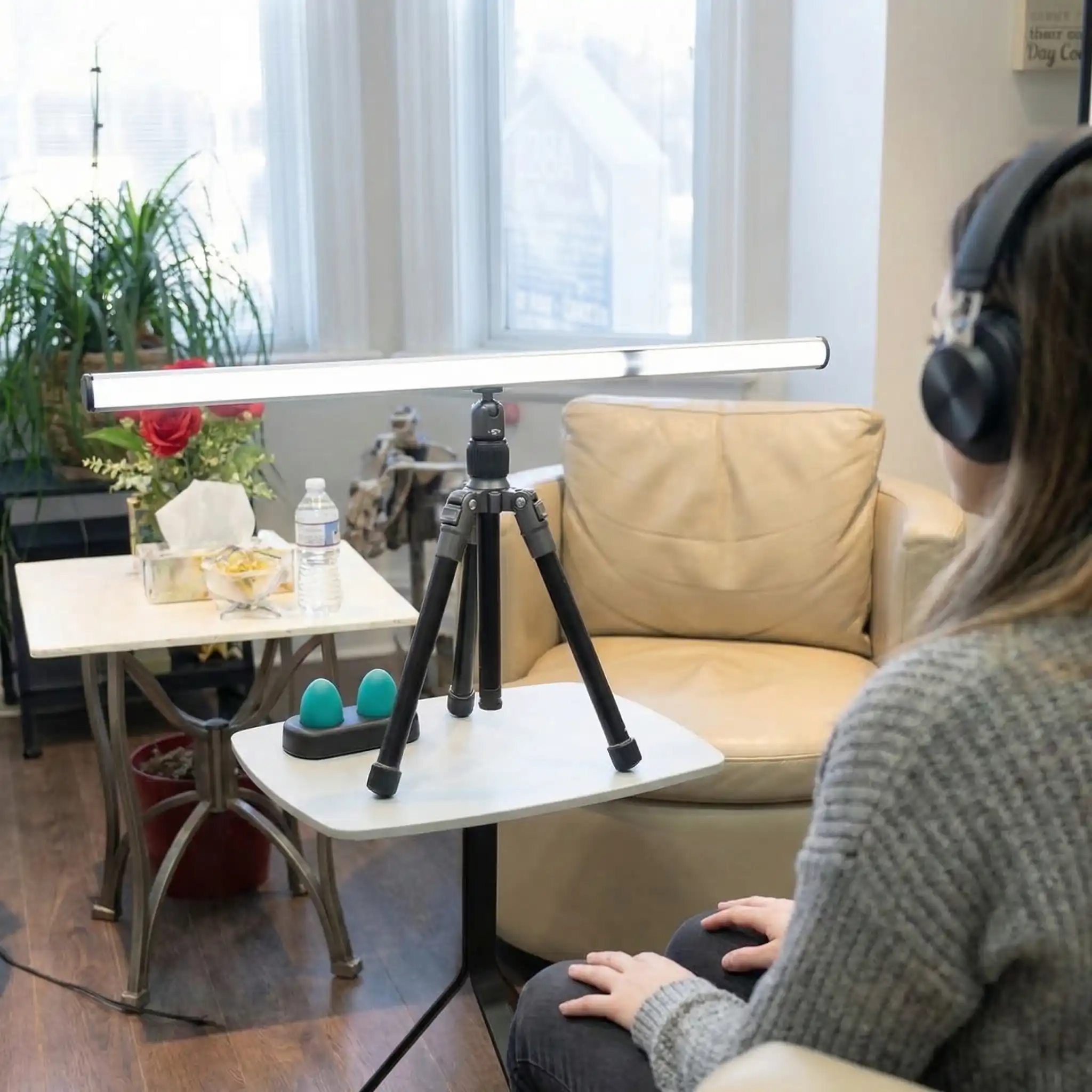
If you feel stuck in the past or triggered by memories that still feel fresh, it may be worth exploring whether EMDR is a good fit for you.

Pantea Rafati is a Toronto-based Registered Psychotherapist with a Master of Arts in Counselling Psychology. She is a member of the College of Registered Psychotherapists of Ontario (CRPO), an active member of EMDR Canada, and a member of the Canadian Counselling and Psychotherapy Association (CCPA).
Pantea brings warmth, safety, and professionalism to every session. With specialized EMDR training that meets EMDR Canada standards, she works with clients to:
Process and reframe traumatic experiences
Reduce emotional intensity and distress
Build resilience and self-regulation
Reclaim a sense of personal safety and inner peace
EMDR is an 8-phase process that helps you reprocess memories that are “stuck” or maladaptively stored in the brain:
Understanding your story, goals, and identifying target memories.
Explaining the EMDR process, building safety and comfort, and teaching grounding techniques.
Ready to start feeling like yourself again?

EMDR is supported by over 30 years of research and is recommended by major mental health organizations, including the American Psychological Association and the World Health Organization.

Unlike traditional therapy, which often requires detailed discussion of traumatic events, EMDR offers a structured approach that doesn’t require revisiting every painful memory in detail. See how EMDR compares to CBT for trauma recovery.
Anxiety is often linked to unprocessed experiences. EMDR works to address the underlying causes of anxiety by:
Targeting fear-based memories
Reprocessing distress into manageable thoughts
Rewiring the body’s response to triggers
Some clients notice a reduction in anxiety and panic as therapy progresses, though the pace and extent of change varies by individual.
PTSD can result from a single event or prolonged exposure to distress. EMDR helps people:
Desensitize disturbing memories
Stop the cycle of re-living the trauma
Reduce anxiety, nightmares, and physical symptoms
Reconnect with a sense of safety and control
EMDR can help you respond to present-day situations with less influence from past experiences.
EMDR sessions can feel emotionally intense at times, though many people find the process relieving as it unfolds. Sessions may involve:
Every person’s process is different. Pantea paces each session according to your readiness.
Pantea Rafati is a Registered Psychotherapist (CRPO) and active EMDR Canada member with specialized EMDR clinical practice. Her approach is trauma-informed and paced to your readiness. The practice is located in Thornhill and serves clients from across the GTA who are looking for a therapist who specializes in EMDR rather than offering it as a side service.
Rafati Counselling Services provides EMDR therapy for clients in Thornhill and nearby communities, including Toronto , North York, Vaughan, Richmond Hill, and Markham as well as other surrounding areas in the north GTA. If you are looking for EMDR therapy in one of these areas, you can learn more about our location-specific pages.
Many extended health benefit plans in Ontario cover sessions with a Registered Psychotherapist. Since Pantea Rafati is a Registered Psychotherapist in good standing with the CRPO, her sessions may be eligible under plans that include RP services. Check your specific plan for coverage limits and eligibility.
If EMDR feels like it could be the right next step, Rafati Counselling Services is here to help you find out.
Contact Rafati Counselling Services today to arrange your EMDR consultation.