

If you feel trapped in a loop of memories that rush back without warning, you are not alone. Many people experience intrusive memories or flashbacks after a painful event. It can feel like the past is happening right now, complete with the same fear, shame, or helplessness. There is a reason your brain keeps replaying what happened, and there are practical steps that can reduce the impact.
When we face overwhelming stress, the brain and body work to keep us safe. Sometimes, those alarm systems stay on long after the danger has passed. The result can be reliving traumatic memories. The good news: there are gentle, realistic strategies that calm your nervous system, reduce reactivity, and help you reprocess what happened so you can move forward. This guide explains why this happens and what you can do next, including options to explore trauma therapy or EMDR therapy in your city.
If you are in the GTA, Rafati Counselling Services (Toronto–Thornhill) provides EMDR alongside trauma-informed therapy for intrusive memories and PTSD; call (647) 947-6242 for a free phone consult.
Why You Keep Reliving Traumatic Memories
Trauma activates the body’s built-in survival system: fight, flight, freeze and FAWN*. In the moment, this response is protective. Your amygdala (the brain’s alarm centre) fires up, your heart races, and blood flows to muscles so you can react. If the event is too intense, too sudden, or repeated, the nervous system can get stuck in a state of high alert. That is when intrusive memories show up.
*FAWN response is a trauma response where a person subconsciously tries to avoid conflict or harm by appeasing others through people-pleasing, submission, or compliance. It is a survival mechanism, added by therapist Pete Walker that functions alongside fight, flight, and freeze, and is often driven by fear, a desire to be liked, and a lack of boundaries. The behaviour is automatic and reflexive, not a conscious manipulation.

When you encounter reminders, a smell, a tone of voice, a place, even a thought, your brain may misread them as danger. It reacts fast, sending you back into the original state. This is why flashbacks feel real and why your body responds with similar sensations (tight chest, shallow breathing, dizziness). None of this means you are broken. It means your system is still trying to protect you, even if it is firing at the wrong times now.
Understanding How the Brain Stores Trauma
Traumatic experiences are often encoded differently from everyday memories. Instead of being neatly filed with a beginning, middle, and end, the memory can remain fragmented: images, body sensations, sounds, and emotions stored without context.
- Amygdala: Detects threat and triggers the stress response, making the memory feel urgent.
- Hippocampus: Normally puts memories in time order. Under extreme stress, it may not integrate the event fully, which is why trauma can feel present rather than past.
- Prefrontal cortex: Helps with reasoning and perspective. When you are triggered, this part can go offline, making it hard to think clearly.
Trusted organizations like the American Psychological Association and the National Institutes of Health describe how trauma responses can persist, leading to symptoms associated with PTSD and related conditions. For a research-based overview, see the APA’s PTSD page: https://www.apa.org/topics/ptsd
Learn how EMDR works and whether it is a fit for you.
Practical Steps to Break the Cycle

These strategies are not about forcing memories away. They help your brain and body register more safety in the present, so the alarm quiets. Try a few and keep what works. Small, repeated practices are most effective.
1) Orient to the present (Grounding Exercise)
- Begin by naming five items you can see around you, saying out loud: “I see…”
- Then identify four items you can see, followed by three, two, and finally one.
- Next, name five things you can hear, again saying: “I hear…” — then continue with four, three, two, and one.
- Repeat the same process with smell and taste (e.g., “I smell…” / “I taste…”).
- When you reach a point where you can no longer identify new sensations, take a deep breath and notice that you are grounded in the present moment.
2) Regulate your breath
- Inhale through your nose for 4 counts, exhale through your mouth for 6. Repeat for one minute.
- If 4–6 is hard, try 3–4 or 2–3. Longer exhales signal safety to the nervous system.
3) Ground through the body
- Plant your feet. Press them into the floor. Feel the contact and support.
- Try bilateral movement: slow, alternating taps on your knees or arms (left, right, left, right) for 60–90 seconds.
- Temperature reset: hold a cool glass or splash your face with cool water.
4) Create a “memory container”
- When memories surge, imagine placing them into a box or journal to revisit later with support.
- Tell yourself, “I will return to this with my therapist on [day/time].” This gives your brain permission to pause.
5) Journal with structure
- Use three prompts: What happened? What do I feel now? What helps me feel 5% safer?
- Keep entries brief. End with a grounding activity so you do not remain activated after writing.
6) Mindfulness in small doses
- Notice sensations without judgment: “Tightness in chest,” “Warmth in hands.”
- Follow with stabilization: a warm drink, a blanket on your shoulders, a short walk.
7) Reduce trigger intensity
- Make a “yellow list” of cues that mildly activate you and practice exposure gently with support.
- For “red zone” triggers, create a safety plan: who to call, what to do, and where to go.
8) Build daily nervous-system care
- Sleep routine, balanced meals, movement (even 10–15 minutes), time outdoors, and moments of connection all support trauma recovery.
- Aim for “good enough” rather than perfect. Small, repeatable habits add up.
If you are in immediate danger or feel you might harm yourself, call your local crisis line or emergency number right away. Help is available now.
Therapies That Help Reprocess Trauma
Self-guided tools can lower the intensity of distress. Reprocessing therapies help your brain file the traumatic memory with context so it no longer hijacks your day.
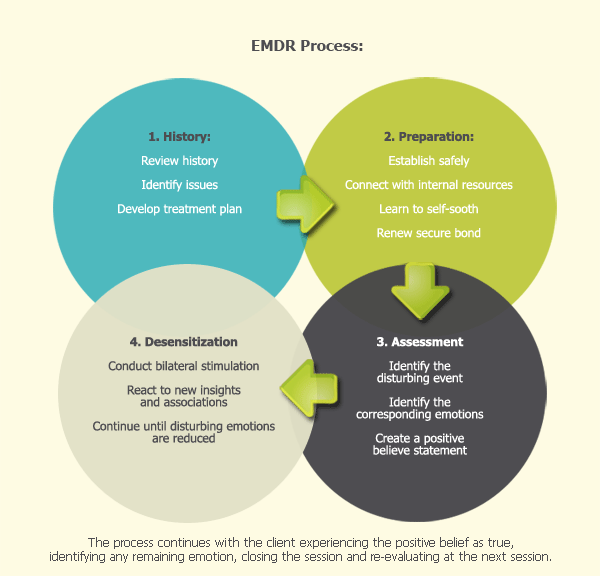
EMDR (Eye Movement Desensitization and Reprocessing)
EMDR uses guided bilateral stimulation (such as eye movements or taps) while you recall aspects of the memory in a safe, structured way. Over time, the memory tends to feel less charged and more integrated. If you search for EMDR therapy in Toronto, look for a clinician trained and certified in trauma care.
Somatic approaches
Somatic therapy focuses on body-based regulation: tracking sensations, completing natural defensive responses, and restoring a sense of internal safety. This can be especially helpful when flashbacks feel primarily physical.
CFT (Compassion-Focused Therapy) with a trauma focus
CFT helps you recognize and shift patterns of thought and behaviour that keep symptoms going. CFT integrates peace, safety, and compassion while addressing the meaning you made of the event.
Trauma-informed therapy
A trauma-informed therapist prioritizes consent, choice, and collaboration. They help you set the pace, build stabilization skills first, and approach memory processing when you feel ready.
If you are local, search trauma therapy in Thornhill or trauma therapy in Toronto to find clinicians who specialize in PTSD and trauma recovery. If you are elsewhere, search trauma therapy near me and filter for EMDR, somatic, or trauma-focused CFT.
When to Seek Professional Support
You deserve support at any time, but consider contacting a therapist if any of the following feel familiar:
- Flashbacks, nightmares, or intrusive thoughts are frequent or intense
- You avoid people, places, or activities that matter to you
- You feel numb, on edge, or irritable most days
- Sleep, appetite, or concentration has changed significantly
- Your relationships or work are suffering
- You use substances or other strategies to numb out
- You feel hopeless or unsafe, or have thoughts of harming yourself
A helpful next step is to book a consultation with a trauma-informed therapist. If you are nearby, try EMDR therapy in Thornhill or trauma counseling in Toronto. Otherwise, search trauma therapy near me and check profiles for EMDR, somatic therapy, or trauma-focused CFT.
In Toronto or Thornhill? Contact Rafati Counselling Services for EMDR and trauma-focused support. FREE phone consultation: (647) 947-6242.
These steps or EMDR procedures won’t erase the past but facilitate the reprocessing of past experiences so that they are integrated as narrative memories., recognized as events that occurred in the past, without retaining the original emotional reactivity or psychological distress.
Conclusion

Reliving traumatic memories can be exhausting and isolating, but it is an understandable response from a system that worked hard to keep you safe. You are not stuck this way. With steady grounding, supportive routines, and therapies that help reprocess trauma, your nervous system can learn that the danger has passed and daily life can feel steadier.
If you are ready, take one small step today: try a grounding exercise, write a few lines in a journal, or book a free consultation with a trauma-informed therapist. If you are local, search trauma therapy in Thornhill or EMDR therapy in Toronto. If not, look for trauma therapy near me to find support where you live. You do not have to do this alone.
Contact Rafati Counselling Services for EMDR and trauma-focused support.
FREE phone consultation: (647) 947-6242.
Authoritative external resource: American Psychological Association — PTSD overview: https://www.apa.org/topics/ptsd